Featured Post

90 Days & Beyond

To say that I have been under intense personal construction and refinement these past months is an understatement. The choice to "not ...

Monday, September 16, 2013

Some Rules of a Fast Metabolism

Excerpts from The Fast Metabolism Diet by Haylie Pomroy highlighting some simple facts:

Your metabolism reflects what you do by creating a body that can survive the conditions it is subjected to.

When you don't eat enough, your body makes conserving your fat stores a special priority, and it creates more fat from whatever you feed it by secreting special, emergency-only starvation hormones that block fat burning (that pesky RT3).  When you eat a lot of nutrient-dense food in the right way, your body relaxes, recognizes the emergency has passed, and starts burning that fat for fuel again--even the cheesecake.

[your body will pay] a heavy price for years of dieting on chemical-filled diet products disguised as food...

The body stores the majority of your reserve fuel in either muscle or fat.  Because muscle is constantly contracting, relaxing, beating, pushing, and pulling, it takes a lot of fuel to create and maintain it.  This is why they say muscle consumes more calories, or energy, than fat.  Fat just sits there.  Have you ever seen it do anything besides flop over your waistband or jiggle around on your thighs?  Fat really doesn't do much but hold on to fuel, and therefore it takes a very little fuel or calories to maintain it.  (And remember, if you don't eat or provide outside fuel, the body will actually break down muscle and store some of that fuel as even more fat.)

*****

from my 3/28/12 Post on Greater Muscle Mass = Higher Metabolism:
    
First, what is metabolism?  Metabolism is the process by which the body generates the energy it needs for maintenance, repair, growth of tissues, and for muscles contraction and movement.  The energy is obtained from the foods we eat.  However, the chemical energy stored in the food that we eat is not directly used to fuel our bodies, but rather it is used to generate adenosine triphosphate ("ATP").  Only a small amount of ATP is stored in the muscle cells.  The body must regenerate ATP once it is used through the process of metabolism.

Muscle is very active tissue and requires continuous energy supplies for ongoing cellular processes such as protein synthesis,  maintenance, and building.  It is estimated that a pound of muscle uses between 30-50 calories a day at rest to meet its metabolic requirements.  That's one pound a day at rest.  How many pounds of skeletal muscle do you have?  How active are you?  Exactly!  When muscle mass is increased so too is your metabolic rate increased, both during activity and at rest.  Conversely, when muscle mass is decreased, your metabolic rate is decreased as well at activity and at rest.  If you are not performing regular strength exercise, muscle mass decreases with age at about one-half pound of muscle every year of inactivity after the age of 25.  It is this reduction in muscle mass that research reveals that resting metabolism decreases approximately half a percent every year after age 25.  Endurance exercises increase metabolic rate only during the activity session and shortly following; however, strength exercises increase metabolic rate during and for a relatively long period following the workout.  No worries if inactivity has been your life thus far, as strength gains have shown to be made even in your 90s...so get moving!

Make sense why Eating Supportively is so important?

Friday, September 13, 2013

Recap

I know I gave you a lot to read this week, but for those of you with heel and/or knee pain hopefully this will give you some additional info to get you going in the right direction.  Beyond correctly moving your muscles and strengthening what is weak, be sure to stretch out what is tight through Yoga or some well developed stretching program/routine, self myofascial release techniques in foam rolling, self trigger point therapy (see below links), and massage. 

Trigger Point Series:Trigger Points
Referred Pain,Trigger Point & Symptoms
Shoulder Trigger Points
Back Trigger Points
Hip & Knee Trigger Points
Final Word On Trigger Points

Thursday, September 12, 2013

Proper Footwear

With all the talk this week on heel and knee pain, be sure to make your footwear a priority as well as your functional movement patterns.  From my 3/13/12 Post on footwear:


Proper Footwear
    
Proper footwear is vital to decreasing your risk of lower-extremity injuries.  Whether you need activity specific footwear (running, walking, tennis, basketball, or aerobics) or multipurpose cross trainers (multiple cardiovascular and weight training activities), your shoes should match both your activity type and level as well as your foot type.  Some general recommendations when shopping for proper footwear from the American Council on Exercise are:

*Get fitted for footwear toward the end of the day.  It is not unusual for an individual's foot to increase by half a shoe size during the course of a single day. However, if an individual plans to exercise consistently at a specific time, he or she should consider getting fitted at that exact time.
*Allow a space up to the width of the index finger between the end of the longest toe and the end of the shoe.  This space will accommodate foot size increases, a variety of socks, and foot movement within the shoe without hurting the toes.
*The ball of the foot should match the widest part of the shoe, and the client should have plenty of room for the toes to wiggle without experiencing slippage in the heel.
*Shoes should not rub or pinch any area of the foot or ankle.  You should rotate the ankles when trying on shoes, and pay attention to the sides of the feet and the top of the toes, common areas for blisters.
*An individual should wear the same weight of socks that he or she intends to use during activity.  You should look for socks that are made with synthetic fibers such as acrylic, polyester, or Coolmax®  for better blister prevention.

It is also important to be aware of when shoes need to be replaced.  If they are no longer absorbing the pounding and jarring action, you are more likely to sustain ankle, shin, and knee injuries.  Athletic shoes will lose their cushioning after three to six months of regular use (or 350 to 500 miles of running).  However, you should look at the wear patterns as a good indicator for replacement.  Any time the shoe appears to be wearing down unevenly, especially at the heel, it is time to replace the shoes.  Additionally, if the traction on the soles of the shoes is worn flat, it is time for new shoes. (ACE Personal Trainer Manual)

Wednesday, September 11, 2013

Massage For The Active Lifestyle

from 6/8/13 Guest Post by Amber Johns, LMT:

Massage for the Active Lifestyle

Massage has become an important part of the new athletic regimen from the seasoned athlete to the weekend warrior. A growing number of professionals believe that massage can provide an extra edge to the athletes who seek to achieve their peak performances. Massage has become a necessary ingredient for a complete workout. More and more people are realizing that a complete workout routine includes not only the exercise itself, but also caring for the wear-and-tear and minor injuries that naturally occur with strenuous movement. The physiological and psychological benefits of massage make it an ideal complement to a total conditioning program.

Any active person can benefit from Massage especially sports massage, from those who routinely stretch their physical limits such as triathletes (swim, bike, run), weight lifters to those maintaining a healthy, active lifestyle such as golfers, recreational runners, local league participants, to the average person with an active stressful schedule .
 
What Happens When You Exercise?

Regular exercise promotes a general sense of well-being. If done in moderation, it can help relieve the effects of stress, and has been linked to decrease in psychological depression. Regular exercise produces positive physical results like increased muscular strength and endurance, more efficient heart and respiratory functioning, and greater flexibility. These positive physical changes occur as the body gradually adapts to the greater demands put on it by regular exercise. The body improves its functioning to meet the challenges placed on it. Conditioning involve three steps or phases: Tearing Down Phase - when one pushes the physical limits, Recovery Phase - Important for the rebuilding phase and to obtain the full benefits of a conditioning program, Buildup Phase - When the system adapts to the new demands placed on it.
 
The 'tearing down' phase of the adaptation process often involves stiffness and soreness, especially when the amount of movement is significantly increased from what the body has been used to in the past. Delayed muscle soreness (24-48 hours after exercise) may be caused by any of a number of different factors. Some possible causes are minor muscle or connective tissue damage, local muscle spasms that reduce blood flow or a buildup of waste products from energy production.
 
Trigger points or stress points may also cause muscle soreness and decreased flexibility. These points are specific spots in muscle and tendons which cause pain when pressed, and which may radiate pain to a larger area. They are not bruises, but are thought by some to be small areas of spasm. Trigger points may be caused by sudden trauma, or may develop over time from the stress and strain of heavy physical exertion or from repeated use of a particular muscle.
 
Heavily exercised muscles may also lose their capacity to relax, causing chronically tight (hypertonic) muscles, and loss of flexibility. Lack of flexibility is often linked to muscle soreness, and makes you more prone to injuries, especially muscle pulls and tears. Blood flow through tight muscles is poor (ischemia), which also causes pain.

What Are The Benefits of Massage for the Active Person?

Incorporating a regular program of massage in your active life has many benefits. It can serve to:
  • Improve circulation of blood and lymph which allows increased metabolic exchange in muscles and other soft tissues of the body
  • Enhance recovery from moderate to intense training and performance
  • Decrease delayed onset muscle soreness associated with new or extreme physical activity
  • Reduce the potential for injury by identifying and addressing minor, musculoskeletal concerns before they develop into injuries 
  • Enhance body awareness 
  • Relieve Pain, Stiffness, Tension, Anxiety and Stress in the body
  • Increase Mental Awareness and Decrease Pain through release of endorphins
  • Release of toxins and waste products in the muscles brought on by the cumulative stress of everyday training and competing
  • Prevent injuries and recover from injures at a much faster rate
  • Remove trigger points, muscle adhesions, and soften scar tissue formed as a result of injury
  • Relax and stretch muscles
  • Improve range of motion
  • Restore elasticity
  • Relax the body and mind
  • Improve your ability to rest more effectively in return increasing your ability to perform activities
At Performance Plus Massage my goal is to help you reach your goals in the most pain free and effective ways possible. Whether you’re a seasoned athlete a weekend warrior or just dealing with day to day stress I can customize a plan for you! I look forward to helping you improve your performance in your day to day activity plus live a happier less stressful life!

Call to schedule your appointment today!

Amber Johns, LMT
931-446-9238
www.Performanceplusmassage.com 

Tuesday, September 10, 2013

Knee Pain

Patellofemoral Pain Syndrome (PFPS), Chondromalacia, and Infrapatellar Tendinitis are all knee pain culprits.  PFPS pain is primarily in the front of your knee.  Chondromalacia is primarily under the knee cap.  Infrapatellar Tendinitis is pain in the distal kneecap into the infrapatellar tendon (inflammation of the patellar tendon where it inserts in the tibia--distal part of the patella and proximal tibia).


Chondromalacia is caused by the posterior surface of the patella not properly tracking in the femoral groove and causes the cartilage under the patella to become damaged by softening or wearing it away.  Be sure to check out this video on YouTube for help with both Chondromalacia and Patellofemoral Pain:  http://youtu.be/xWC4fLSSV6E

from 6/25/12 Post on Runner's v Jumper's Knee
    
Runner's Knee or Patellofemoral Pain Syndrome (PFPS) is anterior (front) knee pain and is often confused with chondromalacia (which is a softening or wearing away of the cartilage behind the patella resulting in inflammation and pain).  PFPS can occur either with overuse, repetitive loading activities causing abnormal stress to the knee joint, or through biomechanical abnormalities altering the tracking of the patella and alignment, or muscle dysfunction and tightness.  If you have pain with running, ascending or descending stairs, squatting, or prolonged sitting, or if you have a gradual achy pain that occurs behind or underneath the patella, or knee stiffness for a prolonged period of time, then you might want to look into the possibility of PFPS and treatment.

Jumper's Knee or Infrapatellar Tendinitis is an overuse syndrome characterized by inflammation of the patellar tendon.  Typical in sports such as basketball, volleyball, jumping sports producing significant strain in the tendinous tissues.  Causes can be poor running style, overtraining, sudden changes in training surface, lower-extremity inflexibility, or muscle imbalance.  If you have pain in the distal kneecap into the infrapatellar tendon or pain when running, walking stairs, squatting, prolonged sitting and you do a lot jumping activities, you might want to look at your footwear, training techniques and frequency.


How our feet move directly impacts how the knee functions just as how tight or weak our thigh muscles and hip function directly impacts how the knee functions.  Be sure to check out the Workout Tidbits Page for help with good training/form.

Law of Facilitation  The body subscribes to the law of facilitation, meaning that the body will achieve the desired movement following the path of least resistance.  If your body has any mobility-stability compromises, you will end up with dysfunctional movement causing inevitable breakdowns at your weakest link.  This is corrected by focusing on moving correctly as opposed to just moving.  A great example is the squat and the push up.  If you just move through either of these movements regardless of incorrect movement just to say you got the move done, you are actually causing layers of damage to muscular and joint function which will impede your progress to moving correctly in those and other movements.  An excellent way to get in touch, stay in touch, as well as improve your mobility-stability issues is to STRETCH.  Yoga is an excellent way to accomplish this.  When you are stretching, regardless of what modality you use, pay attention to what is tight and what is overcompensating for your “weak links” and communicate those findings to me during our sessions.  We can work together to improve your movements so your body doesn’t have to “compromise” to move.


Monday, September 9, 2013

Knowing Achilles Tendinitis from Plantar Fasciitis

"Pain on the back of the heel is usually Achilles tendinitis, not plantar fasciitis. While symptoms may be very similar, they are two very different conditions. The Achilles tendon is the large tendon that attaches to your heel bone right where the back of your shoe hits your ankle. This motion provides the power in the push off phase of the gait cycle. Pain in this area is related to inflammation and overuse of the Achilles tendon.

Plantar fasciitis is typically on the bottom of the heel. Pain and inflammation of plantar fasciitis is also related to overuse.

Achilles tendonitis starts after a particular activity places too much stress on the tendon. This condition usually hurts when you first get out of bed in the morning and can also be worse after heavy activity. Swelling and worsening pain occurs if the condition goes untreated. Most people tend to delay seeking treatment assuming that it will get better on its own.

If you start having Achilles tendon pain it is best to immediately modify your activities to reduce pain. Since this is an overuse injury, the best immediate treatment is to rest your foot and ankle. Anti-inflammatory medication can be helpful for both swelling and pain. If the pain continues for over a week, it is advised to seek medical attention from an orthopedic specialist.

Healing of the Achilles tendon is often slow. Initial treatment involves both immobilization and activity modification. Physical therapy is also an important part of the recovery process. For severe cases that become worse despite appropriate treatment, surgery is a consideration.
" ~Dr. Sandra Klein

Heel Pain

Plantar Fasciitis
 
"Plantar Fasciitis - inflammation in the sole of the foot.
Who gets it? Everyone. People who are active either at work, home, or athletically are more likely to get plantar fasciitis. It is common in runners and walkers and in people who stand for prolonged periods of time.  Pain is located in the arch near the Heel. It is worse in the morning when you get out of bed as well as after prolonged sitting.  The cause of plantar fasciitis is usually related to a tight calf muscle. There is a misconception that the pain is a result of a Heel spur. A spur may form but it is as a reaction to the inflammation in the plantar fascia and is not the cause of the pain."  ~Dr. Stacy Bacon

*****

from my 5/8/12 Post on Is Tendinitis Your 'Achilles'?
    
Got pain in your heel?  Let's see if it could be Achilles Tendinitis....

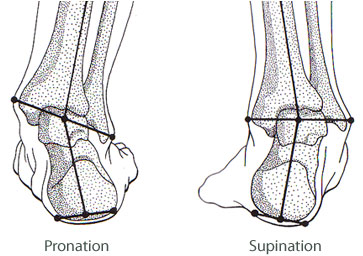
Signs & Symptoms of Achilles Tendinitis are pain in your heel about 2 to 6 cm above the tendon insertion into the heel.  Usually this pain is in the morning first thing and sharp or burning pain that increases with more vigorous activity.  Weak calves can be the cause as can high arches, flat feet, poor footwear, poor flexibility, lateral ankle instability, or errors in training along with leg length discrepancies, age, or prior injuries.  Running uphill increases the load on your calves and Achilles, so if you do a lot of running be sure you are properly warming up and stretching your calves. 

If you have Achilles Tendinitis you can control the pain and inflammation by "ice" (ice, compression, elevation) as well as doing calf raises and stretching.  Beyond that, be sure you are utilizing proper training techniques, proper footwear, and are at the proper weight for your height.  Know that if you do not mend and instead push through the pain you could be risking an Achilles rupture.  Just as with overtraining, overstretching is just as bad and can cause irritation to the musculotendinous unit.  Aim for restoring proper length to the calf muscles to decrease symptoms without overexertion.

Excellent calf stretches are:

*Standing lunge with the back foot heel pressed into the floor for at least 6 breaths;
*Standing lunge with the back foot heel pressed into the floor and back knee bent (this takes the stretch further into your heel) for at least 6 breaths;
*Standing on a step with one heel hanging off for at least 6 breaths.

*****

With Achilles Tendinitis strengthen the calves as well as stretch them.  With Plantar Fasciitis avoid calf strengthen moves and focus on stretching the calves. 
 

Friday, September 6, 2013

Be Kind...Don't Judge...Be You!

You don't know what someone else is going through or where they have come from or where they are headed.  Be kind!  Don't Judge!  Be You and let everyone else be them and worry about themselves!  By the same token:  Be Kind to yourself!  Don't Judge yourself by others!  Be you and do the best you can each moment!

Romans 2:1; 5-6 Therefore thou art inexcusable, O man, whosoever thou art that judgest: for wherein thou judgest another, thou condmnest thyself; for thou that judgest doest the same things.  But after thy hardness and impenitent heart treasurest up unto thyself wrath against the day of wrath and revelation of the righteous judgment of God; Who will render to every man according to his deeds:

Thursday, September 5, 2013

September Workout

Below is the September Free Workout ..... Be sure to click over to Free Monthly Workouts for additional workouts.  Don't Forget too to check out Workout Tidbits for all the Posts and Info on Workout Form and Information to make the most of your efforts!!!!


 September 2013 Workout

50x10 Circuit Workout: 4 Rounds = 20 Min
(50 seconds of work for each move, 10 seconds transition)

*180 Jump Squats (or Jump Squats or Squats)               
*One Hand Elevated Push Ups (or Diamond Push Ups)
*Ball Plank Hold                                                                                       
*Jumping Lunges (or Split Squats)                                                     
*SB Step Offs to Jacknives                                             
                                                          
Intervals 40x20 for 15 Rounds
*Squat Drill-Mtn Climbers-Burpees 

Wednesday, September 4, 2013

Food Rewards

from 7/24/12 Post

Food Rewards
    
Are you guilty of rewarding your children (or yourself) with food?  I know I am.  Have you considered that you are setting them up for emotional eating issues later in life?  Think about it.  If  you reward your child with a "treat" for good behavior and/or revoke a "treat" for bad behavior, the association your child builds is one of comfort with food.  Not good!  Food is fuel and enjoyable, but should not be so closely associated with feelings of emotional comfort and reward.  As an adult, I'm sure you can see in your own behavior how this has been an ongoing issue, so as a parent you can certainly see how you can help them later in their life by not "rewarding" them now with food. Rewards

Instead, reward them and yourself with time (not things or food).  Play a game, read a book, snuggle, whatever it is, trust me when I say that your children will treasure the moments you spend with them both in the present as well in the future.  Then, you will have associated activity and time with emotion as opposed to food or material things. 
Also:  Your Children Are Watching!  &  Sad but True
 
The next time you "reward" yourself for good behavior consider this:  Why would you reward yourself for good behavior with bad habits???

Tuesday, September 3, 2013

September Challenge

My September Challenge to you is to take each day as it comes and be as active within each day as you can.  If you would be interested in a workout challenge and to participate in a small group challenge this month, send me an e-mail at cagib1@charter.net .....